

Electrifying Vuosaari and the port’s work machinery
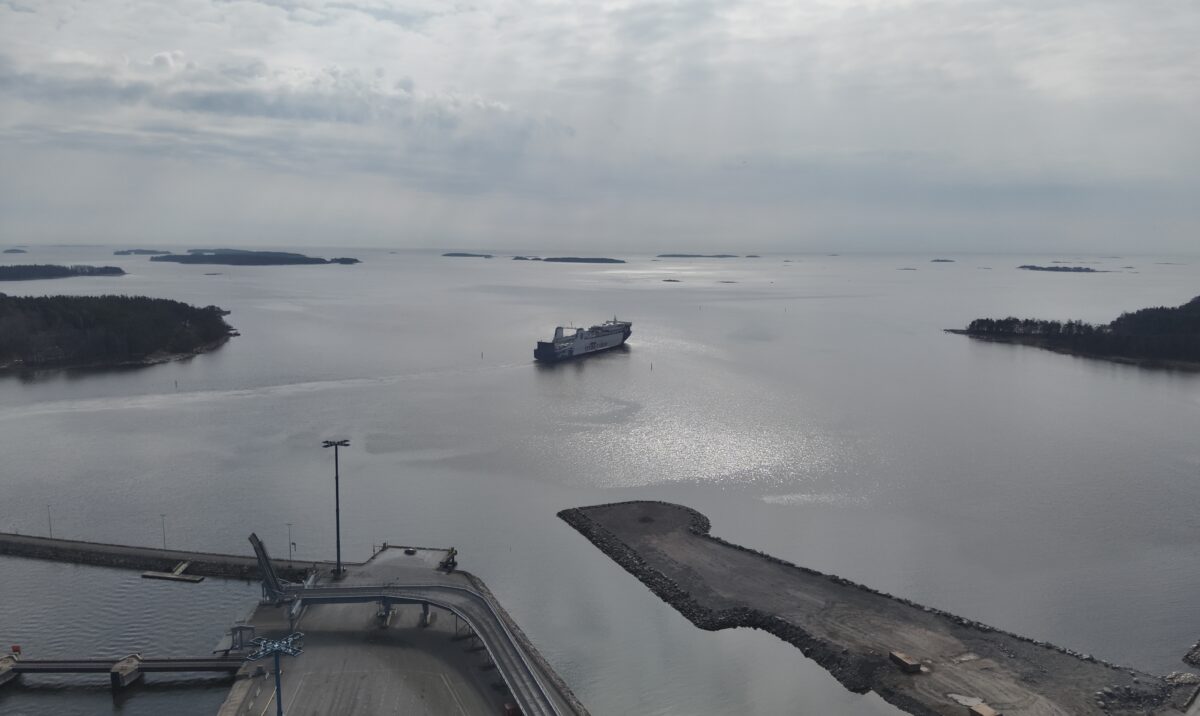
Vuosaari Harbour will take a significant step towards carbon neutrality next summer when port operator Finnsteve Oy Ab commissions three electric straddle carriers. These carriers will help to reduce CO2 emissions from the company’s port operations by up to 13 per cent.
By 2030, the Port of Helsinki is aiming to reduce carbon dioxide emissions from port machinery by 60 per cent compared to the 2015 baseline.
Time is now running out. Although ships are already using shore power and cargo operators have responded to climate requirements, port machinery is still lagging behind. Finnsteve operates at Vuosaari Harbour and the Port of Turku, where the company serves a number of shipping companies, including Finnlines. Finnsteve is now taking a significant step towards electrification.
“For us, electronic straddle carriers are the first step in the right direction. Three straddle carriers will be commissioned in the spring. Straddle carriers are one of the basic tools that we use for moving containers. Their fuel consumption is high, so replacing even one of them with an electric model will achieve significant reductions. We now have the opportunity to introduce three at once, which is a great start for both us and the entire Port,” says Mika Niskanen, Senior Manager, Technical Department at Finnsteve.
Finnsteve currently has a total of 13 diesel-powered straddle carriers in service, some of which will be replaced by electric ones. This alone is estimated to reduce the company’s CO₂ emissions by 13 per cent.
“The new carriers will always be the first ones to be used, and will therefore have a high utilisation rate,” says Niskanen.
Charging capacity is a future challenge
Electricity has been considered a substitute energy source for the future, although other alternatives, such as fuel cells and hydrogen, are also being anticipated. Kalmar, a major manufacturer and Finnsteve’s main supplier of port machinery, is a strong believer in electricity. Electricity availability can be a challenge at smaller harbours. However, the situation is quite good in Helsinki.
“We have 150 pieces of machinery, and about a hundred will be in use at any given time. So a great deal of charging capacity will be required in the future. These are the first electric machines of this size in Finland,” says Niskanen.
There will also be challenges involved in commissioning, particularly in terms of infrastructure and operating procedures. The construction of the charging station is already well underway, as the carriers will be arriving in a few months.
“Electric straddle carriers have been used elsewhere in the world for some time, so in that sense the technology is familiar. Maintenance will initially be carried out by Kalmar’s technicians, but will later be transferred to Finnsteve’s own workshop personnel, who will receive the necessary training. New technology always brings its own challenges,” says Niskanen.
Reductions are significant.
An electric straddle carrier can be operated for about 45–50 minutes at a time, and can be recharged in five minutes. Although this affects the operator’s work, breaks occur naturally in the operation anyway. Electric machinery is quiet, which improves the comfort and working conditions of both the operator and others in the surrounding area.
Finnsteve hopes to electrify an even broader range of its equipment in the future. Niskanen, who has been working in the port sector since 1980, considers it a privilege to be part of this major step forward.
“I hope that we will have plenty more electric machinery in use in five years’ time.”
Electric terminal tractor tested in the summer
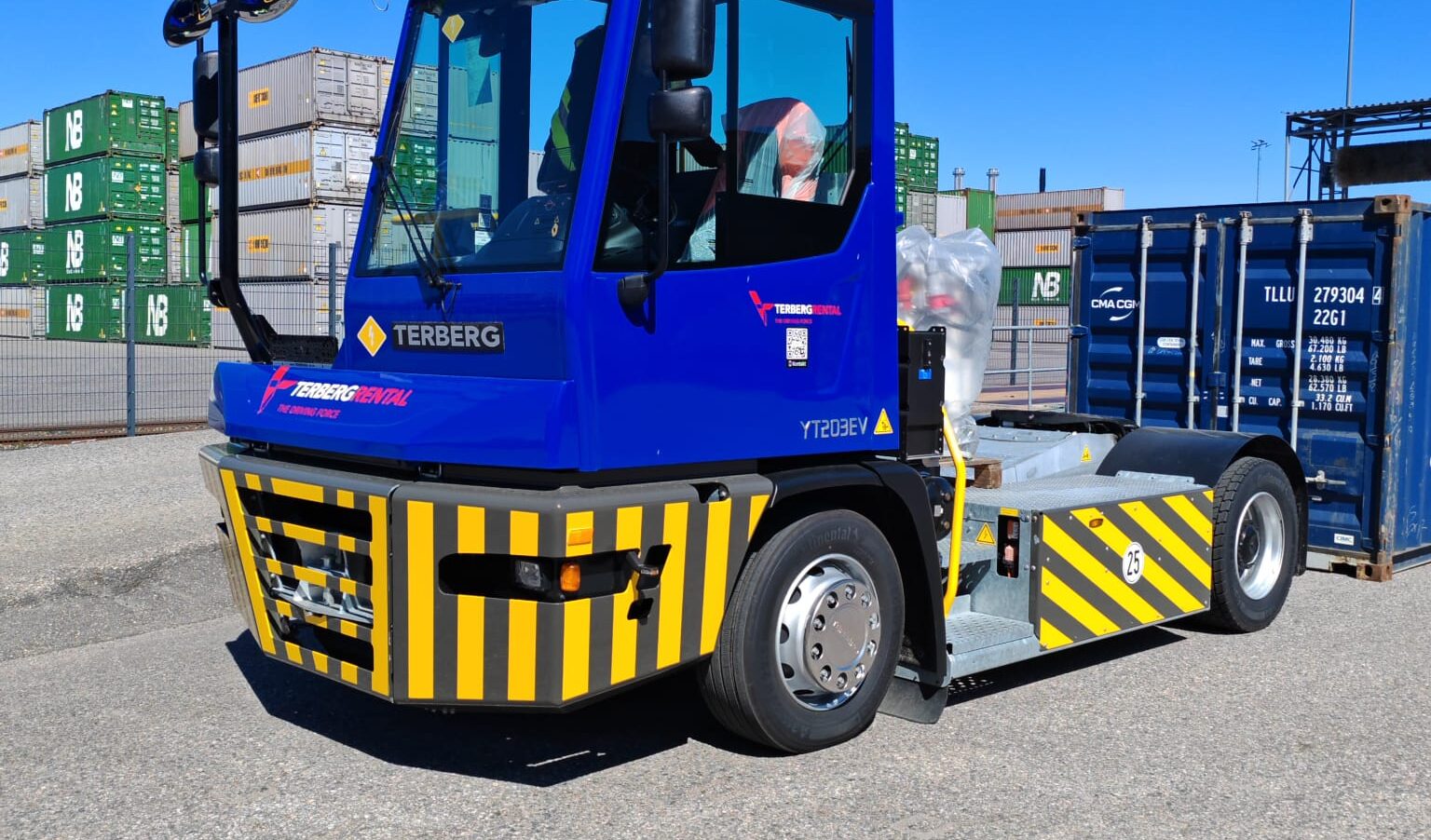
Last summer, Vuosaari Harbour tested a terminal tractor, sometimes nicknamed a ‘yard dog’, which is used to move large loads at terminals. The experiment was the brainchild of two of the harbour’s long-standing partners, Posti and Paulig.
This collaboration began in 2008 with personnel leasing, and in 2014 it expanded to the transport of raw coffee containers from Vuosaari Harbour to Paulig’s roastery in Vuosaari. Posti will be responsible for the equipment and personnel, while Paulig will purchase services to cover both container transfers and the running of the finished goods warehouse.
The partnership has already taken steps towards lower emissions: emissions were cut by almost 90 per cent when terminal tractors switched to biodiesel in 2017. Electric terminal tractors are the next step towards Paulig’s group-wide goal: the electrification of local transport and zero emissions.
“Paulig has been a pioneer in low-emission solutions, including at a European level. Biodiesel was a giant leap, but electric terminal tractors are an area that will help us progress towards zero emissions,” says Tapio Hyvönen, Transport and Customs Manager at Paulig.
Surprising battery life
The two 78-kilowatt-hour batteries used by the terminal tractor that was tested in June were quite sufficient for one shift. Depending on the day, this involved collecting 4–6 containers and returning empty containers to the port area. A full container weighs 22,000 kilos.
“The tractor did well, and its battery life was surprising. Pulling such heavy loads with two batteries sounded impossible, but it worked,” says Teemu Ruotsalainen, a warehouse manager at Paulig.
Ruotsalainen says that these terminal tractors are also available with batteries that have a combined capacity of 236 kWh, which considerably increases their range.
Note! 63 per cent of the Port of Helsinki Ltd’s total energy use was carbon-free in 2024.
The operators were also satisfied. Electric terminal tractors are quiet, which, together with their gearless transmission, makes them smooth and comfortable to operate.
Kai Kankaala, Account Management Director at Posti, notes that this test was just the beginning.
“It was a positive experience, but winter is a question mark. You need four-wheel drives in winter, and if we can find them, we could get emissions down to zero. Rear-wheel drive could be enough, as long as the battery distributes the weight evenly, but that needs testing first, as it’s a major investment.”
Charging infrastructure was not a problem during the test, as Paulig has sufficient charging capacity on its own site. However, both companies hope that the Port of Helsinki and other operators will also invest in low-emission machinery to develop the entire logistics chain. Electrification is strategically important for both Posti and Paulig.
“The Port’s investments and the involvement of other operators are helping to move things in the right direction,” says Tapio Hyvönen.