

Aki Kangasharju: Only courage will lead to economic growth in Finland
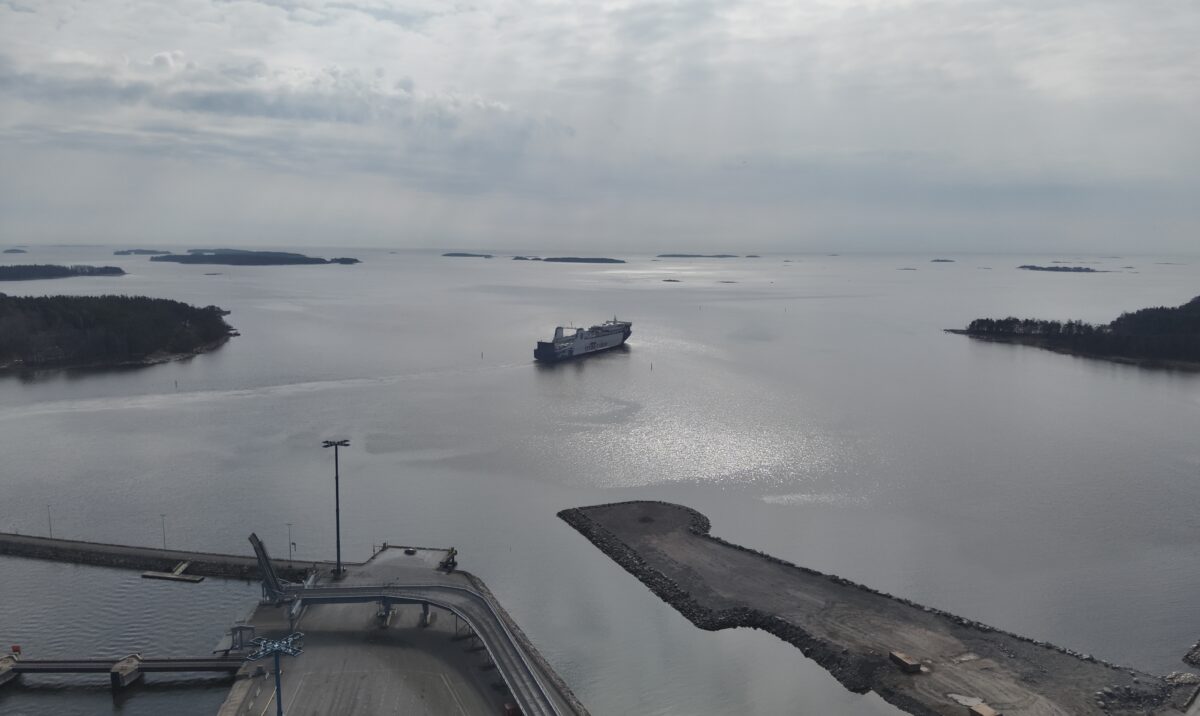
“As ships carry as much as 95 per cent of Finland’s foreign trade, ports and maritime transport are also dependent on economic growth, which is currently being hindered by a lack of courage,” says Aki Kangasharju, CEO of ETLA.
Finland may also have breathed a sigh of relief when US President Donald Trump imposed lower-than-feared import tariffs on the EU: 15 per cent for most products. The overall impact on cargo volumes passing through ports has so far been moderate.
“We can breathe a sigh of relief with regard to Trump’s tariffs. Back in April, both economists and investors believed that a recession was on the way,” says Aki Kangasharju, CEO of ETLA, the Research Institute of the Finnish Economy.
He believes that Finland’s exports may even benefit from Trump’s tough tariff policy in the long run.
“The longer Trump pursues this tariff policy, the more countries that still believe in free trade will look to each other. Globalisation won’t stop just like that,” says Kangasharju.
Why isn’t the economy growing?
In September, ETLA lowered its growth forecast for the current year to just 0.8 per cent. Kangasharju says that the most powerful brake on Finland’s economic growth is a lack of courage, both in households and businesses. In light of the facts, there should be no obstacles to economic recovery.
“People work as hard in Finland as they do elsewhere in Europe, and invest as much as elsewhere. There should be no clear reason why Finland’s economy isn’t growing. Income is growing faster than consumption. It’s not about purchasing power, it’s about willingness to buy,” says Kangasharju.
In a report commissioned by the Finnish Transport and Communications Agency Traficom and the Finnish Transport Infrastructure Agency, the impact of Russia’s war of aggression was given as one of the main reasons for changes in the operating environment of ports. However, others included changes in various industries, such as the closure or opening of individual production facilities, or in global markets.
Globalisation won’t stop just like that.
Overall transport volumes have been falling in recent years.
“Our foreign trade has been supporting economic growth in recent years. Not because exports are doing particularly well, but because imports have been so poor. As domestic demand and investment weakens, so do the quantities of imported goods. This brings bad times for maritime transport and ports that serve industry and the retail trade,” says Kangasharju.
Kangasharju says that the growth measures required in Finland include those that encourage structural changes, so that resources can be more flexibly transferred to growing and productivity-enhancing companies. Kangasharju says that the port sector may also need restructuring.
“Smaller ports could perhaps be closed down and merged into larger ones, such as the Port of Helsinki,” Kangasharju says.
Where will the next export hit come from?
Kangasharju also considers Finland’s ageing population to be a major hindrance to the country’s economic growth.
“Even if a company invests in a new factory, it cannot find people to work in it. As the working-age population declines, a great deal of immigration will be required to remove obstacles to investment.”
He points out that the manufacturing industry as a whole has not increased living standards in years. He says that the biggest question facing the economy is how we can generate flourishing exports with a long value chain in Finland.
“Our longest value chain is for forest-based products, in which we grow and manage the forest ourselves, fell the trees, and process them into export products.”
Kangasharju believes that Finland’s exports will experience a renaissance when we find end-customers for new green products.
“Both the chemical industry and Neste’s refineries stand to benefit when we start making biofuels for ships and aircraft. The metal industry will also experience a renaissance when the Raahe steel plant switches to green electricity.”
The biggest future trends for ports are related to the energy transition and the transition away from fossil fuels.
“For every hundred euros spent on refining Russian oil in Porvoo, only two euros have remained in Finland. Fuel made from our own green energy would provide many more jobs and much greater prosperity than the Russian oil that was previously refined here.”
Kangasharju believes that growth will pick up, and that Finland’s economy will have grown by next year already.
“But this growth will be stunted, so we should make a real push. Growth could have begun sooner, but the various shocks and external disturbances in the world are without doubt making people feel much more pessimistic than they should.