

The West Harbour expansion requires working from the sea
The expansion of the southern end of the West Harbour is in full swing. Organising a large construction site so as not to disrupt vessel, passenger or cargo traffic has required careful planning.
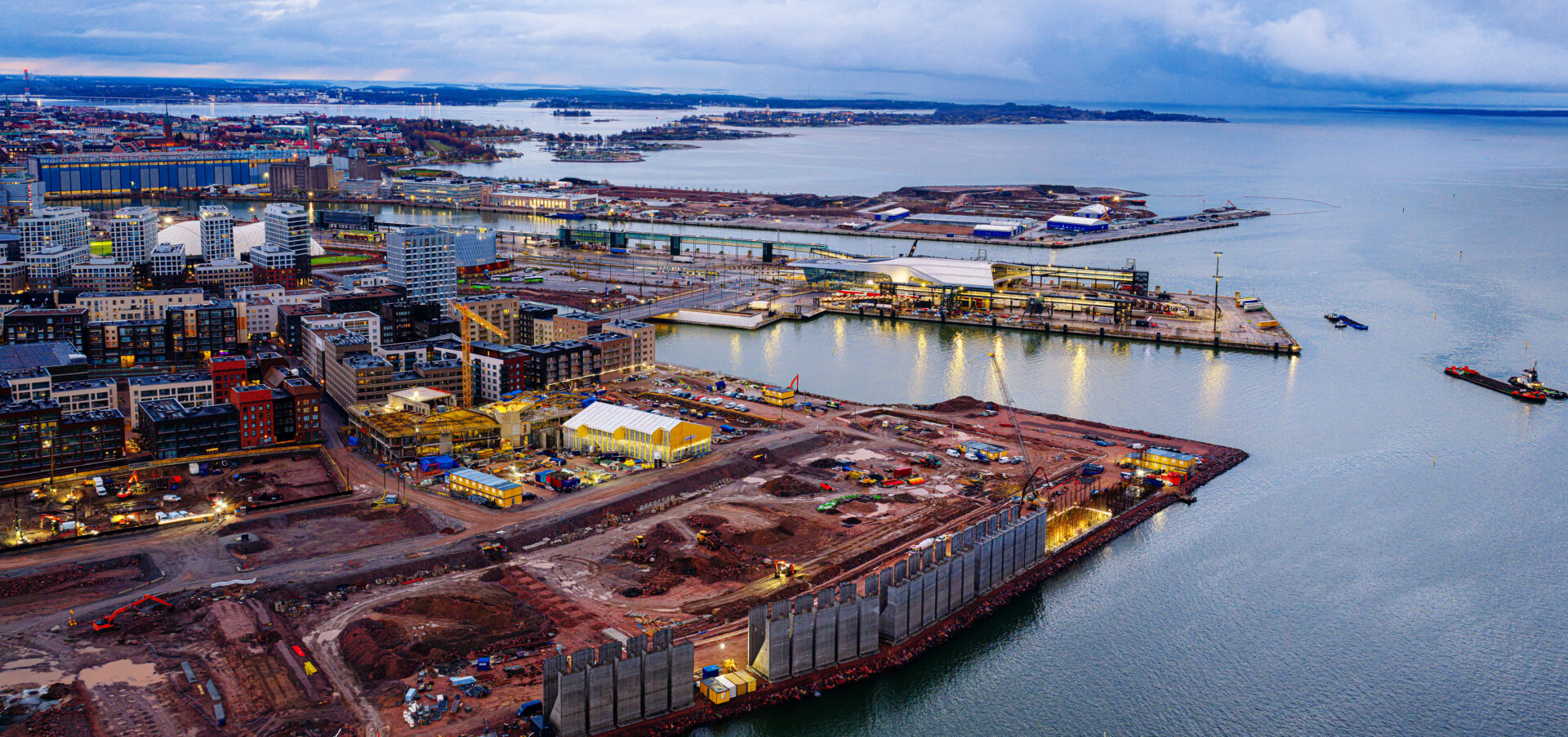
‘Well planned is half done.’ This Finnish saying is at least true when it comes to the West Harbour expansion project, which will create around 1.2 hectares of new land at the southern end of the harbour. The extension is scheduled for completion by the end of 2027, and the contract has a value of around EUR 28 million.
The construction site opened in August, but planning began months earlier between the Port of Helsinki and its chosen contractor, YIT Infra.
“Our basic principle was to create a concept that was as smooth as possible and would not disturb external parties, even though work is being carried out around the clock,” says Antti Eskelinen, Project Manager at YIT Infra.
Careful scheduling
About 130,000 m3 of clay soil will be dredged from the expansion area, which will then be filled with rock waste from a number of construction sites.
“About 300,000 m3 of rock waste will be required as filler material. No less than eight barges will be in use at peak periods, some of which can transport up to 3,000 m3 of waste rock to the southern tip at once,” says Eskelinen.
The rock waste will be stored in Hernesaari and in Ruusuniemi in Vuosaari. Retaining walls for the extension are being built in Neptunuksenpuisto in Jätkäsaari. A total of 67 wall elements will be made, the largest of which will be 14.2 metres high and weigh 250 tonnes. Approximately 8,000 m3 of concrete and 1.3 million kilos of reinforced steel will be used, resulting in 340 metres of new quay.
All port users in general receive real-time information about the project.
“As a rule, onsite work will be carried out on the southern extension construction site during the day, while any work that may disrupt traffic will be done at night. Almost all work and transport is being done from the water, so as not to disrupt the port’s own traffic. Sixty-seven people will be working on the project once casting gets underway,” says Eskelinen.
Weekly newsletter for better information flow
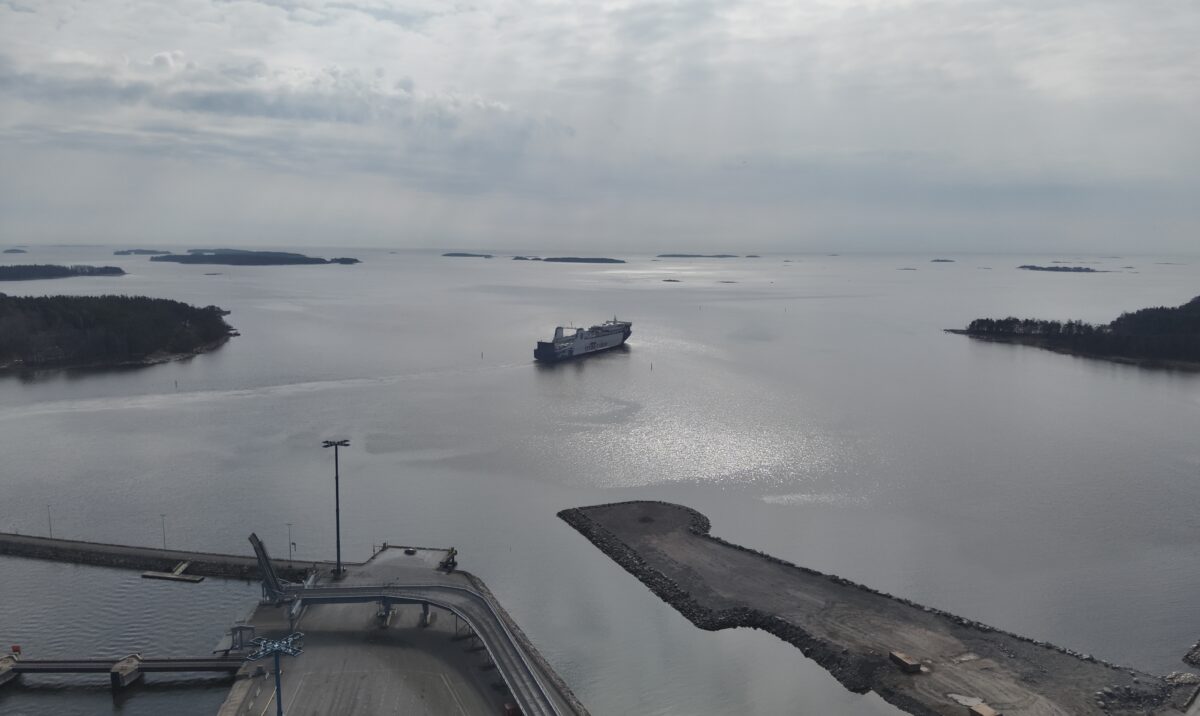
Vessel traffic is famously brisk in the West Harbour.
“We have invested in safety and avoiding disruptions. There will be no changes or delays to liner traffic timetables. Tugs and dredgers remain in continuous contact with the VTS system that controls vessel traffic, so the location of all work vessels is known. The area is filled as it is dredged. The excavated subsoil is deposited further out to sea. Everything is being done in accordance with official regulations. The construction site area is also clearly marked with buoys and landmarks, and there is a speed limit in effect in the area,” says Jukka Haarni, Cruise Manager at the Port of Helsinki.
The primary information channel is a weekly newsletter that will be sent to all relevant stakeholders throughout the project.
“Weekly announcements were a prerequisite for this project. The weekly newsletter has proven to be a very good solution, and has also helped to cut down on meetings. Each week, shipping companies, vessels and all port users in general receive real-time information about the project and anything that needs to be done. This is helping to streamline operations.
“The average passenger may notice some construction site activity, but it should not affect the passenger experience – and reports indicate that it hasn’t. As there is very little construction work being carried out on land, there has been no increase in road traffic in the area either,” says Haarni.
Modernisation of the West Harbour
The modernisation of the West Harbour has been divided into three main parts, the first of which is the extension of the harbour and quay area. The next steps will be the construction of a new passenger terminal and port tunnel.
The Helsinki City Council approved the local detailed plan for the port tunnel at the end of 2025.