


Filtering stormwater from port areas reduces impacts on marine nature
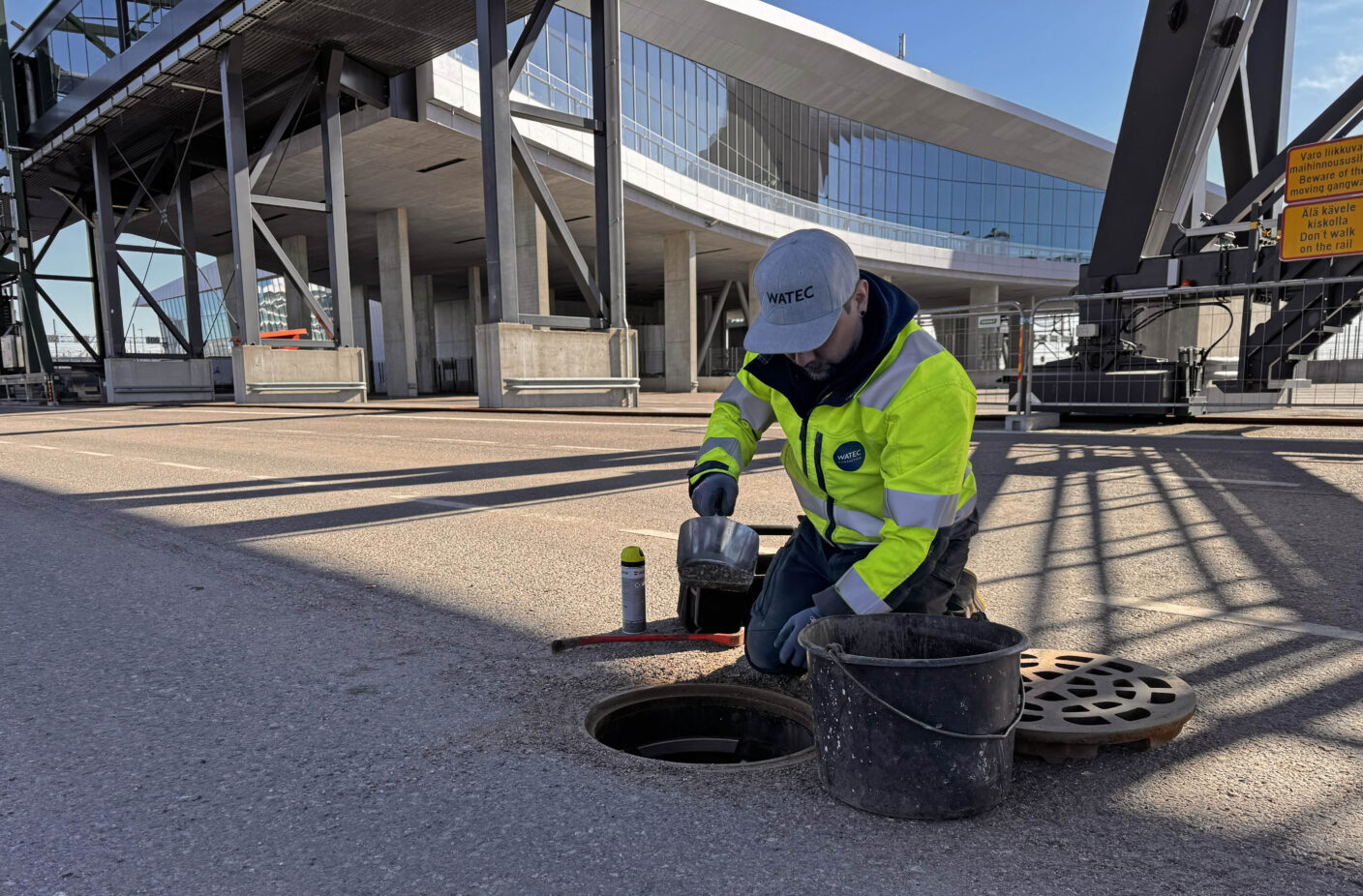
The Port of Helsinki is investigating the filtration of stormwater within its port areas. A pilot project at West Harbour, which has already been running for half a year, has reduced the amount of debris and harmful substances ending up in the sea. Following the pilot phase, the stormwater filtration scheme will be expanded at West Harbour.
The pilot project on stormwater filtration at West Harbour involved testing drain-specific filters developed by Watec in nine stormwater drains. These drains are situated in West Harbour, in front of Terminal 2 and at Quay LJ8.
“At the passenger harbours, stormwater is discharged into the sea, which is why it is important to reduce the amount of debris and any harmful substances carried along with it. At Vuosaari Harbour, which is a cargo harbour, stormwater management is also partly based on closed systems,” explains Anton Airas, Environmental Manager at the Port of Helsinki.
Debris and grit accumulated in the filters
The stormwater filtration pilot began in October 2025 with the installation of Watec filters in nine stormwater drains. When the filters were emptied for the first time in April, they had been in use for about six months.
The area is frequented by lorries, trucks and passenger vehicles. During the pilot phase, a total of 90 kg of material ended up in the drains, consisting mainly of gritting sand, mixed with a large number of cigarette ends and nicotine pouches. Laboratory tests revealed that the material also contained some oil and heavy metals. Concentrations of several harmful substances exceeded the threshold or guideline values. However, the oil content, for example, was below average when considered in relation to the land use.
“The results support the view that the general level of cleanliness at West Harbour is good. Even though the amount of solids accumulated in the filters was fairly modest, a total of over 200 grams of oil and several other harmful substances that pollute the Baltic Sea were removed from the stormwater before they reached the sea,” Airas says.
The Port of Helsinki is preparing its own biodiversity action plan
Preserving biodiversity and preventing its loss are important objectives for the Port of Helsinki.
“Last year, we were involved in creating the Finnish Ports Association’s Biodiversity Roadmap for Finnish Ports, and since then we have continued this work by identifying our own impacts on nature, best practices in environmental management and future objectives. We need this
understanding as we seek effective solutions that benefit nature amidst busy port operations.”
“The installation of drain filters may seem like a minor measure, but it is a topical example of how preventing the adverse effects of port operations is a matter of priority for us. Investigating stormwater loads in port areas and preventing debris and harmful substances from entering the sea reduces nutrient loads and contributes to better seawater quality,” Airas continues.
A geotextile tube filter collects debris and harmful substances
The Filtro drain filter, developed and patented by Watec, is made from geotextile tube, which allows water to pass through while retaining the solids, debris and harmful substances carried along with it.
Watec is a Finnish company whose filtration solutions are in use across Finland in locations such as sports fields, shipyards, recycling plants and ports.
Stormwater filtration is being expanded
The trial period confirmed that the filtering of stormwater brings tangible benefits to the sea and its flora and fauna. There were also some practical lessons to be learnt: in the future, it will be easier to select the most suitable filter materials and emptying intervals for demanding port conditions.
Based on the pilot, the Port of Helsinki has decided to expand its stormwater filtration in the busy West Harbour, where traffic volumes are highest and the impact is therefore greatest.